
Container Buying Guides
Last updated 24 October 2026
Container Buying Guides — the detail that matters is below, written for this business rather than for the industry in general.
Buying a container is not complicated, but it is full of small decisions that are expensive to reverse. These guides cover the ones that matter: which grade you actually need, which size fits the job, what delivery involves and what to check when the unit arrives.
Container Buying Guides: the short version
What follows covers these buying guides: what is included, what is quoted separately, what we do not claim, and what to send us to get a firm number. It is written to be read before you commit rather than after.
Container Buying Guides: what container grades actually mean
The grade is a shorthand, and shorthands are only useful if applied honestly. Behind the label sit four separate questions: does it keep water out, does it keep weight in, does anything mechanical still work, and does it look the way the price implies.
Two units of the same grade can still differ in how long they will last before they need work. A unit that has sat empty ages differently from one loaded and unloaded weekly. That is why the listing describes the unit in front of us rather than the category it belongs to.
Container Buying Guides: choosing a size
Container sizes are standardised: 10ft, 20ft, 30ft, 40ft, in 8ft width, with high cube variants adding roughly a foot of height. The choice is usually made by what has to fit through the doors and what has to fit inside, in that order — a 40ft unit is no use if the access cannot take it, and a 20ft unit is no use if the load is 7 metres long.
Height is the specification buyers most often regret. High cube costs little more and solves the problem of a forklift, a mezzanine or a tall load that will not clear a standard door.
Container Buying Guides: how delivery is quoted
A delivery quote is built from distance, equipment and access. Distance is the easy part. Equipment depends on whether the unit can be tipped off a tilt-tray, side-loaded, or has to be craned into place. Access determines whether the truck can get close enough for any of those to work.
We ask for a description of the approach because the most common delivery failure is a site that matched the postcode but not the truck. Narrow streets, low branches, overhead lines, steep drives, soft ground and tight gates all change the plan.
Container Buying Guides: what this site does not claim
There are things a container listing is often expected to state that this site deliberately does not. We do not publish a warranty period, because the honest term depends on the unit, the use and the site. We do not publish stock quantities, because they change daily and a stale number is worse than no number. We do not publish delivery prices, because delivery is a function of distance and access and a published price would be wrong for most buyers.
What we do instead is answer those questions specifically when asked, against the unit and the postcode in front of us. A quoted answer is worth more than a published average, and it cannot mislead someone whose situation differs from the average.
Container Buying Guides: payment
Payment is by bank transfer or PayID. The order number goes in the transfer reference so the payment can be matched without an email chain, and the invoice is issued before the transfer is made so the amount and the reference are both in writing.
Card payment is not offered. The surcharge that would have to be added to cover it is better left off the price than buried in it.
Container Buying Guides: how to get a price
Send the product name and your postcode. Add a photograph or description of the approach and the drop point if the site is anything other than open, level and clear. That is enough to come back with a delivered price rather than a unit price plus an unknown.
If the layout needs changing, describe the change at the same time so the modification and the delivery can be quoted together. Two quotes for one job are slower and usually worse than one quote for the whole job.
Container Buying Guides: looking after a container once it is on site
Maintenance is mostly about water and movement. Water gets in at seals, at fixings, at anything cut through the shell, and at the roof seam. Movement matters because a container on an uneven surface will twist, and a twisted container stops being watertight and starts being difficult to open.
The routine that prevents most problems is short: clear debris from the roof, operate the doors through their full travel every few months, look at the seals twice a year, and touch up bare metal before rust gets a hold.
Questions about this page
- Container Buying Guides: what do these container buying guides cover?
- Sizes and what each is for, what condition grades actually mean, how delivery is quoted, what maintenance a unit needs, and the costs that follow the purchase price.
- Container Buying Guides: which container buying guide should I read first?
- The one on grades. Most of the money in a container purchase sits in condition, and most of the disappointment sits in a grade that was described loosely.
- Container Buying Guides: are container buying guides specific to this business?
- They describe how this yard operates. The general principles apply anywhere; the delivery, inspection and quoting detail is how it works here.
- Container Buying Guides: what is the biggest mistake buyers make?
- Choosing the size before checking the access. A 40ft unit that cannot be delivered is not a bargain, and the delivery is often the part nobody quotes first.
- Container Buying Guides: do container buying guides explain used versus new?
- Yes. A one-trip unit has made a single loaded voyage and is effectively new in service terms; a used unit has been in service and is described at the grade it actually meets.
- Container Buying Guides: why do container buying guides not list prices?
- Because delivery and modification are quoted per job rather than published. The unit price is on every listing; the rest depends on the postcode and the site.
- Container Buying Guides: do container buying guides cover maintenance?
- Yes, and it is short: clear the roof, operate the doors through their full travel, check the seals twice a year, and touch up bare metal before rust takes hold.
- Container Buying Guides: what is not covered by these container buying guides?
- Regulatory advice. Freight and heavy vehicle rules change and are enforced by state authorities; the National Heavy Vehicle Regulator is the source, not a sales page.
- Container Buying Guides: how many containers can I compare at once?
- All 324 are listed, filterable by category and sortable by price. Comparing three units side by side is usually enough to see where the price difference actually comes from.
- Container Buying Guides: do container buying guides apply to trailers and horse floats?
- The condition and maintenance principles do. Trailer specifications, towing rules and registration are their own subject and are quoted per unit rather than generalised.
- Container Buying Guides: can I get advice before buying?
- Yes. Send the job rather than the product name, and the answer will tell you whether the unit you had in mind is the right one for it.
- Container Buying Guides: what should I check when the container arrives?
- The floor, the door and its seals, the frame at the corners, and the roof. Everything else is cosmetic. Note anything that does not match on the delivery paperwork before signing.
- Container Buying Guides: do container buying guides explain what a grade is worth?
- They explain what each container buying guide grade checks, and why two units at the same grade can still differ in how long they last before work is needed.
- Container Buying Guides: are container buying guides useful for a first purchase?
- They are written for one. Container buying guides start with what has to fit through the doors, because that decides the size before price gets involved.
What condition means on a container
Grades exist because buyers need a shorthand, and the shorthand is only useful if it is applied honestly. A container is offered as cargo-worthy, wind and watertight, or as-is. Behind that label sit four separate checks: does it keep water out, does it keep weight in, does anything mechanical still work, and does it look the way the price implies.
The practical consequence is that two containers offered at the same grade can still differ in how long they will last before they need work. A unit that has sat empty in a yard ages differently from one that has been loaded and unloaded weekly. We describe the unit in front of us rather than the category it belongs to — which is the only description worth having when you are buying at a distance.
How a container is inspected before dispatch
The inspection list for a container is short and unglamorous, and that is the point. It covers doors swung open and shut, door seals run by hand, floor sounded for soft spots, corner castings inspected, frame and roof photographed as found. None of it requires special equipment; all of it requires someone to actually do it rather than assume.
The reason to spell this out is that buying a container remotely is otherwise a leap of faith. You are trusting a photograph and a sentence. The inspection is what turns those into something you can act on: specific findings, recorded at a specific time, on the unit with your name on it. Anything found is disclosed before dispatch, not after payment.
Delivery and site access
Most delivery problems are access problems wearing a distance disguise. A container on a tilt-tray truck or a side-loader needs width, height, turning room and a firm surface. If any of those is missing the driver will stop rather than risk the unit, the truck or the fence — and that is the correct decision, but it costs everyone a day.
We quote delivery against postcode and site access, and we would rather have an awkward conversation about your driveway on the phone than an awkward one at the gate. Tell us the approach, the surface and whether there are overhead lines, and the quote will carry the right equipment. Delivery runs Australia-wide from our Queensland yard.
What modification is possible on a container
Modification is quoted separately once the layout is known, because the honest answer to “how much” is that it depends on what you are trying to achieve. A door in a flat panel is a different job from a door in corrugation. Windows in a lined space are a different job from windows in a bare shell. Power is a different job again depending on whether it needs to be certified for the use you have in mind.
The work is done in our own workshop rather than subcontracted, which is why the quote can be specific. Come with a sketch, a purpose and a constraint — budget, timeline, or the fact that it has to pass an inspection — and the scope can be priced against that. Common changes for a container of this kind are site storage, secure tool lock-up and shipping and export.
Hire as well as purchase
Hire is available on a container for short and long terms, and the same inspection standard applies to a hired unit as to a sold one. That is not a marketing line: a hired container that fails on site costs the hirer a day of labour and costs us the relationship, so the incentive to check it is identical.
Hire suits a project with a known end date, a trial before committing to a purchase, or a peak that does not justify owning a unit outright. Terms are quoted against duration and delivery distance. If you are weighing hire against purchase, the useful comparison is not the monthly rate — it is the monthly rate plus delivery, collected twice, against the purchase price less whatever the unit is still worth at the end.
Buying a container instead of the alternatives
The alternative to a container is usually a site shed or a lock-up garage. That option wins on one axis and loses on others, and which axis matters depends on your site. Purpose-built structures are easier to finance and easier to insure as fixed property; a container is faster to place, easier to relocate and usually cheaper per square metre of covered space.
The question worth asking is how long you need it, and what happens at the end. If the answer is “two years then we move”, a container that can be picked up and taken with you is worth more than a cheaper structure that cannot. If the answer is “twenty years and it never moves”, the calculus changes, and it is worth saying so before you buy.
What buyers usually ask
Is the price negotiable? The price shown is the unit price. Delivery, modification and hire are separate. Ask about multiple units in one delivery — that is where there is usually room, because the saving is in the trip.
Can I inspect it first? Yes. The yard is in Queensland and inspections are welcome by arrangement. Bring a torch and a tape measure; the two things buyers most often wish they had brought are light and a way to check that the dimensions suit what they intend to put inside.
How do I pay? Bank transfer or PayID. The order number goes on the transfer reference so the payment can be matched without an email chain. Card payment is not offered because the surcharge would have to be added to the price.
What if it is not what I expected? Say so before it is modified or dispatched. Once a unit has been cut, painted or delivered, the scope of what can be undone shrinks quickly — which is why the inspection photographs exist and why we send them.
Do you deliver to my area? Delivery is Australia-wide. The quote depends on distance and access, and both are things you can influence by describing your site accurately.
What to check when it arrives
Check the unit against the photographs before the truck leaves. That sounds obvious and is routinely skipped, because the driver is in a hurry and everyone wants the job done. Ten minutes spent walking the container with the listing open on your phone is the cheapest insurance in the transaction.
Look at the four things that are expensive to fix: the floor, the door and its seals, the frame at the corners, and the roof. Everything else is cosmetic. If something does not match, note it on the delivery paperwork and photograph it before signing. A note made at delivery is a conversation about a fix; a note made a week later is a conversation about who is responsible.
Then leave it alone for a wet week before you load it, if you can. Water finds the weak point on its own schedule, and a dry week hides more than a wet one reveals.
Cost of ownership beyond the purchase price
The purchase price is the smallest part of what a container costs over its life, and the parts that follow are worth planning for. There is delivery in, and — if it ever moves — delivery out. There is the surface it sits on, which determines whether it stays level and whether the doors keep operating. There is whatever it takes to keep water out as the seals age. And there is the cost of the space it occupies, which in a city yard is not nothing.
Against that, a container depreciates far more slowly than a fitted-out building and can usually be sold into a live market rather than written off. The resale value is the reason used units hold their price, and it is the reason buying a sound used unit rather than the cheapest available one tends to work out better over five years.
Looking after a container
Most of what shortens the working life of a container is avoidable, and the avoidable parts are the same on every site. Standing water on the roof. A base that settles unevenly under one corner. Seals that were never looked at because the doors still shut. Fixings that were cut in and never sealed. None of these are dramatic failures; they are slow ones, and they compound.
A sensible routine is seasonal rather than constant. Before the wet season, clear the roof and check the door seals. Once a quarter, operate every moving part and look at the corners and the floor for anything new. Once a year, walk the whole thing with a torch and a camera, and compare the photographs to last year’s. That comparison is what catches a problem while it is still a touch-up rather than a panel replacement.
The terms used on this page
A few terms come up repeatedly when buyers discuss a container, and they are worth defining plainly because they are often used loosely. Cargo-worthy means the unit would still be accepted for freight — structurally sound, watertight, no holes. Wind and watertight means exactly that: it keeps weather out, without any claim about freight certification. As-is means what it says, cosmetic and functional faults disclosed but not rectified.
One-trip, sometimes called single-trip, means the unit has made one loaded voyage and is effectively new in service terms. Grade A describes the best cosmetic condition in a used band, not a structural standard. High cube refers to the extra height — around 9ft 6in against the standard 8ft 6in. Cor-ten and corten steel are the weathering steel most containers are built from. Where a term on this page is not one of these, it is being used in its ordinary sense and not as a rating.
Next step
If a container looks like the right unit, the fastest way to a firm number is to send the product name and your postcode. That gets a delivered price, which is the only price worth comparing against another supplier’s delivered price. If the layout needs changing, describe the change at the same time and both can be quoted together rather than in sequence.
If it is not quite right, say what is wrong with it. Too long, too short, wrong colour, wrong grade, wrong end of the budget — every one of those is a useful description, and it is quicker than starting the search again from the top of the catalogue.
Related pages
- Browse the full container and trailer catalogue
- Container delivery across Australia
- Container hire
- Container modification
- Shipping container questions
- Contact and get a quote
External reference
For freight and heavy vehicle rules that apply to moving a container, see the National Heavy Vehicle Regulator. We do not give regulatory advice, and nothing on that site is specific to this business.
Photographs from the yard
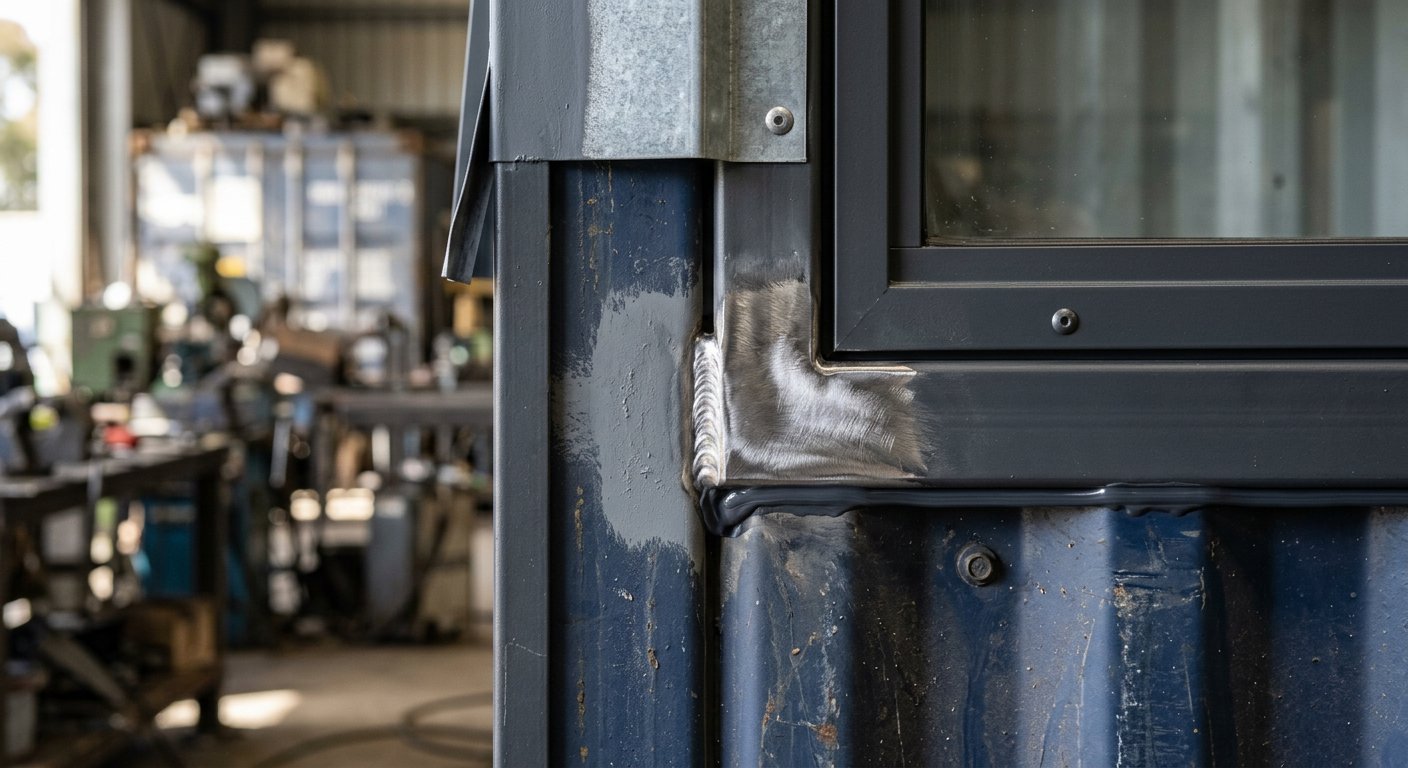
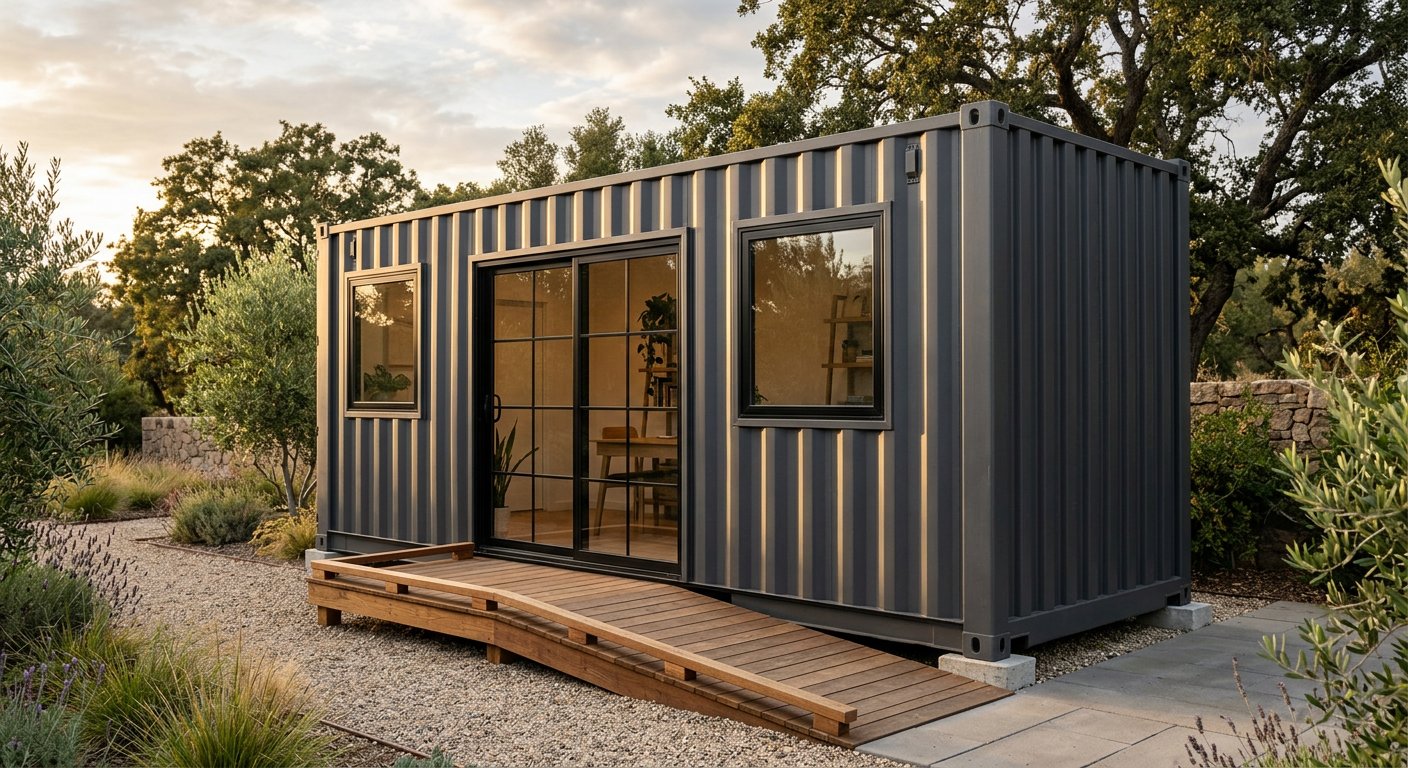
Ten builds we finished ourselves — site offices, workshops, kiosks, cool rooms and more.
Questions about this page: support@seawaycontainer.com.